Columbia University Manhattanville Development
The Manhattanville Development is a transformational 17-acre master-planned expansion that redefines the integration between a global academic institution and the surrounding urban fabric of Upper Manhattan.
Delivering One of the Largest Urban Academic Expansions in U.S. History
Client name
Columbia University.
Project Value
USD $7 Billion
Location
Manhattanville, New York City, USA.
Sector
Higher Education / Research / Urban Infrastructure

Project Overview & Strategic Intent
This « mega-project » represents a strategic move by Columbia University to expand its research and academic capacity within a highly constrained urban footprint.
- Urban Integration: The design utilizes an « Urban Layer » concept—transparent ground-floor « Commons » spaces that are open to the public, fostering a sense of connectivity between the university and the West Harlem community.
- Subterranean Innovation: To maintain street-level transparency, a massive, contiguous 75,000-square-foot underground basement was constructed. This « Bathtub » structure houses a Central Energy Plant (CEP) that provides high-efficiency utilities (steam, chilled water, and electricity) to multiple campus buildings through a centralized distribution network.
Detailed Scope of Works
The engineering complexity of this project is among the highest for urban developments in the United States:
Slurry Wall Foundation System:
To manage the high water table near the Hudson River and protect adjacent structures, the team deployed advanced slurry wall technology. This created a rigid, watertight perimeter for deep excavation, reaching depths of several stories below grade.
Zuckerman Mind Brain Behavior Institute (Jerome L. Greene Science Center):
A critical component of the expansion, this facility houses Nobel Prize-winning scientists. It features a double-skin glass façade and a sophisticated structural system to eliminate vibrations that could interfere with sensitive microscopy and research.
Central Energy Plant (CEP):
o A massive, state-of-the-art power facility located entirely below grade. It utilizes Combined Heat and Power (CHP) technology to achieve a 30% reduction in carbon emissions compared to traditional utility setups.
Role & Leadership: Alagie Sanyang
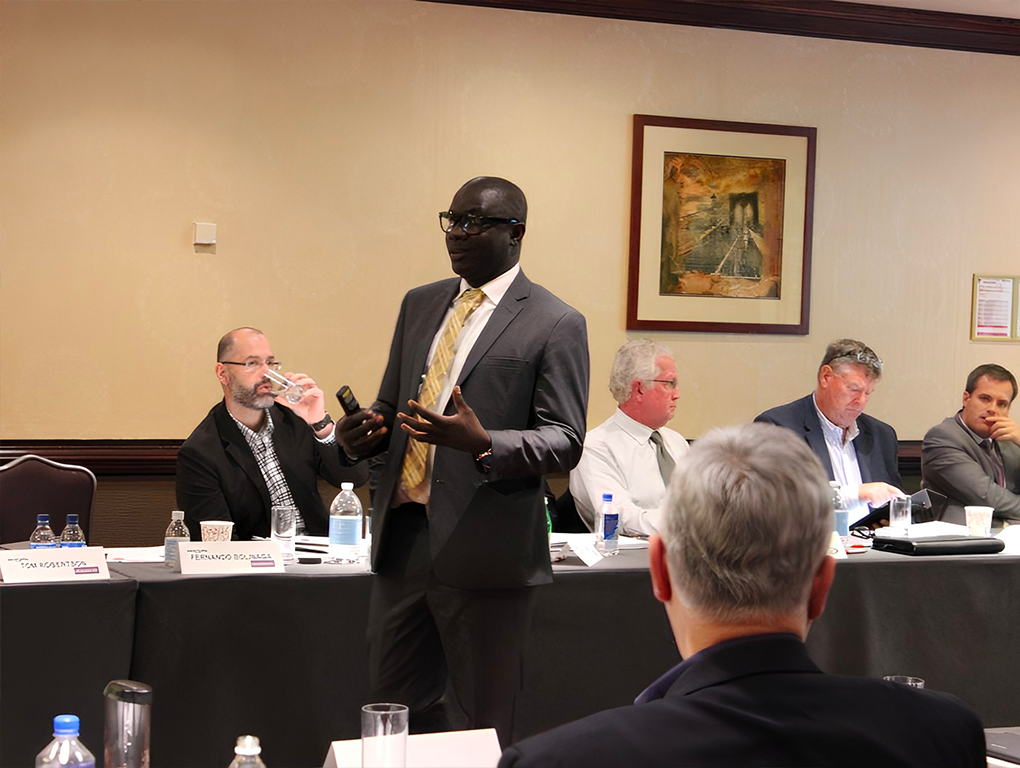
Mr. Sanyang served as Director for Lend Lease, the primary construction firm for this $7 billion expansion. His leadership was instrumental in:
- Execution Governance: Overseeing complex work packages including the Zuckerman Institute and the foundational slurry wall systems.
- Safety Systems Leadership: Leveraging his background as a VP of Corporate Safety and Director of EH&S to manage safety protocols in one of the world’s most regulated and dangerous construction environments.
- Multi-Stakeholder Coordination: Acting as a bridge between the University’s vision, city regulatory agencies (NYC DOB), and the various engineering consultants and subcontractors.
Technical Highlights
Contiguous Basement: The creation of a « campus-wide basement » that allows for all logistics and trash removal to happen entirely underground, keeping street-level traffic clear for pedestrians.
Sustainable Infrastructure: The project is part of a LEED-ND. Platinum (Neighborhood Development) certified plan—the first of its kind in New York City. Mr. Sanyang’s LEED AP BD+C accreditation directly aligned with these high-performance sustainability goals.


Environmental, Social & Urban Impact
Economic Catalyst: Generated thousands of construction jobs and provided a long-term home for thousands of researchers, staff, and faculty.
Community Revitalization: Replaced industrial warehouses with publicly accessible open spaces, revitalizing a formerly underutilized section of Upper Manhattan.
Operational Resilience: The centralized energy system ensures the university can remain operational during major weather events or grid failures, a lesson learned from Hurricane Sandy.
Key Lessons & Best Practices
- Safety as a Core Value: On a $7B site, a centralized and uncompromising safety culture is the only way to prevent incidents.
- Infrastructure First: Solving the subterranean utility and foundation challenges early allowed for a more flexible and transparent architectural design above ground.
- Governance Continuity: Complex expansions require executive leaders who can maintain long-term vision across multi-year phases of construction.