National Road Construction Program
This case study focuses on the National Road Construction Program, a multi-site infrastructure initiative delivered by The Cornerstone Group for the Government of The Gambia. The program is a strategic investment in the nation’s « feeder road » network, designed to unlock economic potential in rural and agricultural regions.
Strengthening Rural Connectivity, Trade Access, and National Mobility Infrastructure
Client name
Government of The Gambia
Project Value
USD $20 Million.
Location
Multiple regions across The Gambia
Sector
Transport Infrastructure / Civil Engineering

Project Context & Strategic Objectives
For The Gambia, rural roads (feeder roads) are the arteries of the agricultural economy. Prior to this program, many rural communities faced « seasonal isolation » during the rainy season. This $20 million program was launched to achieve several critical national goals:
- Market Integration: Connecting production zones in the interior directly to regional markets and the Trans-Gambia Highway.
- All-Season Mobility: Ensuring that healthcare, education, and emergency services are accessible year-round, regardless of weather conditions.
- Logistics Efficiency: Reducing the « wear and tear » on vehicles and lowering the cost of transporting agricultural produce to urban centers.
Detailed Scope of Works
The program involved a complex coordination of multiple sites, requiring Cornerstone to manage logistics across dispersed rural zones:
Feeder Road Rehabilitation & Construction:
- Sub-grade & Base Preparation: Extensive earthworks involving grading and compaction to create a stable foundation capable of supporting heavy transport vehicles.
- Surface Treatment: Application of durable surfacing designed to withstand the high-impact rain cycles of West Africa.
Drainage and Erosion Engineering:
- Culvert Installation: Strategic placement of reinforced concrete culverts to manage water runoff and prevent road washouts.
- Side Drains: Construction of lined and unlined drainage channels to direct water away from the road structure, preserving the integrity of the pavement.
Ancillary Civil Works:
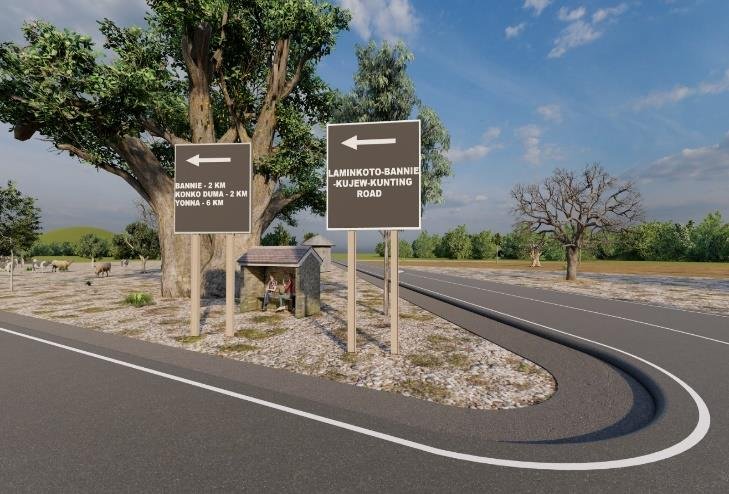
- Road Safety Features: Installation of essential signage and basic markings to improve visibility and safety for rural commuters.
- Access Management: Ensuring safe interfaces between the new feeder roads and existing community footpaths and dwellings.


Technical Highlights
Cornerstone applied its Turnkey (Design-Build) and Construction Management expertise to ensure consistency across all sites:
- Standardized Quality Control: Implementing uniform material testing and construction methodologies to ensure that a road in the Upper River Region met the same high standards as one in the West Coast Region.
- Weather-Adaptive Scheduling: Sequencing the heavy earthworks during the dry season to avoid the structural risks associated with building on saturated soils.
- Logistics Optimization: Managing a complex supply chain for materials (laterite, gravel, cement) in remote areas where local availability can be a constraint.
Environmental, Social & Economic Impact (ESG)
Economic Impact: Directly lowers the cost of doing business for thousands of smallholder farmers and transport operators.
Social Impact: Significantly improves « Last Mile » access to essential services, reducing the time required to reach regional hospitals and schools.
Environmental Impact: Properly engineered drainage systems reduce soil erosion and flooding in surrounding agricultural lands, protecting the local ecosystem.


Key Stakeholders
- Government of The Gambia: Project owner and primary funding body.
- The Cornerstone Group: Prime contractor responsible for site execution, safety, and quality assurance.
- Ministry of Transport, Works and Infrastructure (MoTWI): Technical oversight and alignment with the National Development Plan.
Critical Success Factors
Community Engagement: Early coordination with local village authorities to manage land use and right-of-way during construction.
Safety First: Implementation of international safety protocols to protect both the workforce and local villagers in active construction zones.
Scalable Operations: The ability to mobilize multiple teams simultaneously across different regions of the country.